


Demulsifier
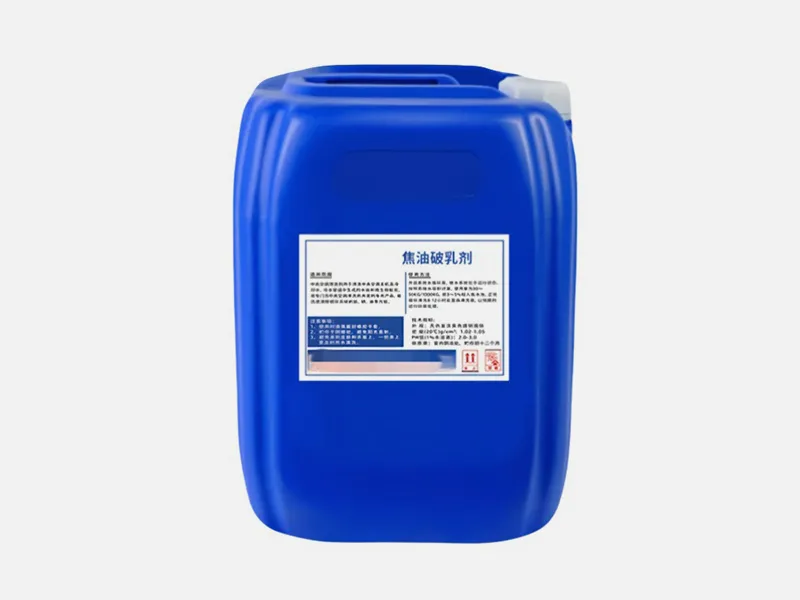
Demulsifier Product Introduction
In the treatment of oily wastewater from industries such as machining, steel, oilfields, and coking, do you repeatedly encounter these problems: the emulsion system is stable, ordinary chemicals struggle to break the emulsion, oil and water refuse to separate, and the oil content in the effluent remains high, which can easily cause sludge poisoning when it directly enters the biochemical system; the traditional demulsification process requires repeated pH adjustment and dosing of multiple chemicals, making operation cumbersome, and a slight oversight by O&M personnel can cause the effect to collapse; after demulsification, the amount of scum is large and the water content is high, making hazardous waste disposal costs absurdly high; for complex emulsified wastewater with high salinity and high concentration, conventional chemicals simply cannot handle it, and the treatment effect fluctuates. This high-efficiency demulsifier, developed by Jing'anlan Environmental Technology specifically for various types of emulsified oily wastewater, is a composite cationic polymer chemical. Through the synergistic action of high-density positively charged groups and interface-modifying components, it can rapidly reduce the oil-water interfacial tension, break through the electrical double layer structure of the emulsion, and cause dispersed tiny oil droplets to quickly destabilize, coalesce, and rapidly float upward. It has excellent demulsification effects on both oil-in-water (O/W) and water-in-oil (W/O) emulsions, and is a core chemical for oily wastewater pretreatment and ensuring the stable operation of subsequent processes.
Core Value and Product Advantages
1. Fast demulsification speed and high oil-water separation efficiency
After dosing, obvious oil-water separation can appear within minutes. Micron-sized oil droplets quickly aggregate into large oil beads and float upward, without the need for long settling and separation, greatly improving the system's treatment capacity and enabling stable operation even under high water volume shocks. After treatment, the oil content in the effluent can be reduced to below 50 mg/L, meeting the influent requirements for subsequent biochemical treatment and fundamentally avoiding the impact and poisoning of activated sludge caused by oily substances.
2. Significant scum reduction, lowering hazardous waste disposal costs
Unlike the loose flocs formed by traditional inorganic chemicals, the oil flocs formed after demulsification by Jing'anlan demulsifier have a dense structure and low water content. The scum volume can be reduced by more than 40%, greatly lowering the cost of subsequent collection, dewatering, and hazardous waste disposal. Long-term operation can save considerable disposal costs, truly reducing treatment costs across the entire process.
3. Strong water quality adaptability, stable even under complex conditions
It can exert good demulsification effects within a wide pH range, eliminating the need for repeated dosing of acid and alkali to adjust water quality, simplifying the operation process and reducing the consumption of acid and alkali chemicals. It has strong tolerance to emulsified wastewater with high salinity, high concentration, and complex composition. Even if the influent oil content fluctuates greatly, it can maintain a stable demulsification effect without frequently adjusting dosing parameters.
4. Low operational threshold, no need to modify existing processes
Can be directly dosed for use, with no need for complex demulsification equipment or treatment units, adapting to various existing process scenarios such as regulating tanks, coagulation reaction tanks, and air flotation machines. Whether for new projects or efficiency improvement of old systems, it can be quickly launched with results, with zero modification threshold, quickly solving demulsification challenges.
5. Synergistic pollutant removal, reducing subsequent process load
While demulsifying and removing oil, it can simultaneously flocculate and remove some suspended solids, colloids, and organic pollutants in water, reducing the load on subsequent biochemical and advanced treatment units, helping to improve overall effluent quality and reduce the operating costs of subsequent processes.
Applicable industries and scenarios
Machining and hardware manufacturing industry: demulsification and oil removal pretreatment for cutting fluid, emulsion, and grinding fluid wastewater
Steel and metallurgy industry: oil-water separation for cold rolling emulsion, oily alkaline wastewater, and steel rolling wastewater
Oilfield and refining industry: demulsification treatment for oilfield produced water, polymer-containing wastewater, and refining oily wastewater
Coking and leather industry: pretreatment of wastewater containing tar, animal and vegetable oils, and mineral oils
Catering and food processing industry: advanced treatment after oil separation for wastewater containing animal and vegetable oils
Chemical industry: pretreatment of high-concentration organic emulsified wastewater
Usage Recommendations and Selection Guide
The oil composition, emulsification degree, and salt content of different wastewater vary greatly, and the difficulty of demulsification differs accordingly. Jing'anlan Environmental Technology recommends first conducting a beaker jar test to screen for the suitable model and determine the optimal dosage, achieving the best balance between treatment effect and operating cost. General usage reference: It can be dosed directly as the original liquid, or diluted and added to the reaction tank via a metering pump, with stirring to ensure thorough mixing of the agent and wastewater. Recommended dosing points are the outlet of the regulating tank, the front end of the coagulation reaction tank, or the water inlet of the air flotation machine. The conventional dosage is 100-2000ppm; the specific amount needs to be determined through a jar test based on the oil concentration and emulsification degree of the wastewater. It is recommended to use in combination with PAC and PAM: first add the demulsifier for full reaction, then add the coagulant and coagulant aid, which can further improve the solid-liquid separation effect.
Jing'anlan Service Support
We focus on oily wastewater treatment, providing not only demulsification agents but also complete technical service support.
Free water sample testing and demulsification jar tests, with a dedicated dosing plan tailored to your wastewater quality and precise cost calculation per ton of water
Technical engineers provide on-site commissioning, assisting in optimizing dosing points and process parameters to quickly achieve stable compliance
Stable supply system with regular stock of standard models and rapid response for emergency replenishment
Customized formulas available for highly difficult emulsified wastewater, solving demulsification challenges for special water quality
If you are facing problems such as poor demulsification effect, large amounts of scum, or excessive oil in the effluent, you can contact Jing'anlan Environmental Technology for free water sample testing and demulsification testing services, and we will customize a highly cost-effective treatment solution for you.
Product Inquiry
Are you interested in this product? Please contact us.


